
Bathroom Sink Buying Guide
Bathroom Sink Buying Guide

Choosing the right bathroom sink can make a big difference to both the look and functionality of your bathroom. With a wide range of styles, sizes, materials and installation options available, it’s important to consider how the sink will fit your space and suit your everyday needs.
This guide explains the different types of sinks available, their unique features and things to consider before purchasing.
Shop Bathroom Sink Related Categories


Key takeaways
-
Style: The bathroom sink you choose should complement the bathroom’s overall design - including the vanity, taps, tiles, and accessories.
-
Bowl shape: Rectangular, square, oval, and round sinks offer different aesthetics and space efficiency.
-
Installation: Consider plumbing position, countertop/vanity compatibility, and whether professional installation is needed.
-
Maintenance: Smooth, non-porous surfaces are generally easiest to keep clean. Avoid abrasive cleaners on delicate finishes.
Choosing the right bathroom sink
Bathroom sinks (also referred to as basins or wash hand basins) come in a wide range of styles, shapes and sizes to suit different types of bathrooms and uses.
-
Space: The space the sink needs to fit into (e.g., a large or small bathroom, ensuite or cloakroom) and how the sink will be used (e.g., just for hand washing or is it also for washing, shaving, teeth cleaning etc.). This will help you decide what size you need.
-
Sink height: Sinks with pedestals or ones that sit on a countertop are around 85cms high, which is roughly hip height for the average person. But you may need the sink to be higher or lower (i.e., for tall people, children or those with mobility needs), in which case a wall-mounted sink that can be installed at any height is a good choice.
-
Bathroom taps: You’ll need to match the number of tap holes in the sink to the type of taps you want. Most sinks only have one central tap hole to accommodate a mixer tap. A few have two holes for separate pillar taps. Whilst, most countertop basins don’t have holes, so they require a high-riser mixer tap.
-
Design & style: Do you want it to match the rest of the bathroom suite? And are you looking for a contemporary or traditional bathroom sink look?
Different types of bathroom sink
Bathroom sinks come in contemporary and traditional styles and can be purchased separately or as part of a bathroom suite. There are many different types of basins to choose from.
This section looks at the different types of sinks, their pros and cons and what situation they’re best suited for.
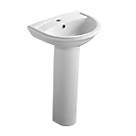
Pedestal basins
Pedestal basins are one of the most common styles found in bathrooms and cloakrooms. They consist of a basin that’s fixed to the wall, with a pedestal or column sitting neatly below it to conceal the pipework. There are two types of pedestal basins:
Full pedestal basin: this option features a pedestal that reaches from the basin to the floor. Although the basin is fixed to the wall, the pedestal can take some of its weight, which means full pedestal basins are available with larger, heavier basins than those only attached to the wall. They are also easier to fit. Their only downside is that they take up space below the sink and make it hard to clean the floor.
Semi pedestal basin: this option features a smaller pedestal that hides the pipework but doesn’t reach the floor. They are harder to install than full pedestal basins because the basin and pedestal must be fixed to the wall. However, they give the illusion of more space and leave the floor clear, making cleaning easier.
Pedestal basins come in various contemporary and traditional styles to suit most bathrooms. They're also available in a range of sizes, from small and compact to large.

Wall-hung basins
As the name suggests, wall-hung basins are basins that are hung on the wall. They don’t have a pedestal, which means the waste pipes are exposed, and they tend to be shallower than pedestal basins to limit their weight. They are the perfect solution for small bathrooms, ensuites and cloakrooms with limited space. They make a room appear bigger and leave the floor clear, making cleaning easier. Some wall-hung basins are called cloakroom basins and can come in incredibly compact sizes.
Large wall-hung basins need a frame to support their weight if fitted to a stud work wall. But they can usually be secured to masonry walls without a frame. One of their benefits is that they can be installed at any height, so they're the ideal choice for those who want a low sink for children or people with mobility needs. Unfortunately, the exposed pipework can be unsightly if white plastic pipes are used. However, attractive-looking chrome bottle traps can be used instead.

Countertop basins
Countertop basins sit on top of a countertop on a piece of bathroom furniture. The countertop has a hole cut out for the waste pipes, so the plumbing is concealed to create an uncluttered look. They are ideal for all sizes of bathrooms and tend to come in modern and contemporary designs. They’re also perfect for those who need extra, hidden storage space.
Most countertop basins have no tap holes, so high-riser mixer taps must be installed on the countertop behind or to the side of the basin.

Semi-recessed basins
Semi-recessed basins are another type of basin that's fitted into bathroom furniture. The basin slots into the top of the unit with its front exposed and projecting outwards. The rest of the basin, as well as the plumbing, is concealed inside.
Semi-recessed basins tend to be traditional in design and are ideal for large bathrooms with fitted furniture. But they're also useful in smaller bathrooms as they incorporate extra, hidden storage to provide a clean, uncluttered look.

Commercial basins
Commercial basins are designed for heavy-duty use in environments where hygiene is of the highest importance, such as hospitals and restaurants. They're made from stainless steel to provide excellent durability. They're usually manufactured by brands well-known for their reliability which is essential because they'll get higher-than-average use compared to a basin in a residential property.
Other basin types
The basins above are the most common, but there are some other less common ones to be aware of.
Corner basins: these basins are asymmetric in shape, so they can fit into a corner of a bathroom or cloakroom. They take up less space than other types of bathroom sinks, so they're ideal for small spaces. There are wall-hung and pedestal basin options available.
Undermount sinks: these basins usually come as part of a vanity unit. They are mounted underneath the unit's surface, so only the sides and base of the basin are visible. Everything else is hidden inside the unit. Undermount sinks provide a seamless look and make the whole sink area easy to clean.
Bathroom sink sizes, shapes and colours
When buying a bathroom sink, consider what size and shape you need.
Bathroom sink dimensions vary considerably, with sink widths ranging from around 350mm up to 570mm, and depths (i.e., their projection into the room) ranging from 305mm to 460mm. So, checking the basin dimensions fit into the available area is essential. Also, think about what space is needed around the basin.
Sink shapes can be separated into four categories:
- D-shaped: these sinks are straight across the back, so they can butt up against a wall and are curved around the sides and front. D-shaped bathroom sinks are available in pedestal, semi-recessed and wall-hung options.
- Rectangular: these sinks have four straight sides and are longer in width than depth. Their corners may be rounded off depending on the design. Rectangular basins are available in pedestal, wall-hung and countertop options.
- Round: round bathroom sinks can be completely round or more oval in shape. They are available as countertop sinks or sinks which can be recessed into a vanity unit.
- Square: these sinks have four straight sides with equal widths and depths. Their corners may be rounded off depending on their design. Square bathroom sinks are available in pedestal, wall-hung and countertop options.
Most people choose to match their bathroom sink to the shape and style of their bath and toilet.
Choosing a sink colour
White remains the most popular colour for bathroom sinks. It works with virtually any décor, complements all bathroom styles and has a timeless quality. It also creates a clean, fresh appearance that suits both traditional and contemporary bathrooms.
However, coloured sinks have become increasingly popular in recent years, giving homeowners more options for adding personality to their bathroom. Available colours range from soft pastel pinks and blues to bold reds and yellows, as well as more subtle natural stone shades. You can choose a sink colour that complements your existing décor for a cohesive look, or select a contrasting shade to make the basin a standout feature.
Types of bathroom sink materials
There are a few different types of wash basin materials to choose from, each with pros and cons. This section looks at the different types so you can decide which is best for your needs.
Ceramic: Ceramic is the most common material for bathroom sinks. It is durable and resistant to scratches, chips, impacts, and limescale, making it suitable for busy bathrooms. Ceramic sinks are also easy to clean with gentle products, although hand-painted and glazed surfaces should be cleaned carefully to avoid damage from abrasive cleaners or brushes.
Resin: Resin is a strong, durable, non-porous material made from stone particles and resin. It is resistant to scratches, stains, and discolouration and can be cleaned with water or mild cleaner. Abrasive, acidic, and ammonia-based products should be avoided. Unlike ceramic, minor scratches can be polished out with sandpaper.
Glass: Glass basins are usually made from tempered safety glass, which is strong, easy to clean, and helps retain heat. However, they can still break if dropped or hit by a hard object, although they shatter into small pieces to reduce the risk of injury.
Stone: Stone basins can be made from any type of natural stone, such as granite, marble, sandstone or travertine. Usually, the basin is carved out of a single block of stone, so they come in unique colours and designs and can be a beautiful feature in a bathroom. However, stone is porous, so stone basins usually come pre-treated with a sealer, which needs to be reapplied every two years. And it's sensitive to harsh chemicals, so it should only be cleaned with soapy water.
Stainless steel: Stainless steel is a durable material containing chromium, which makes it resistant to rust, stains, bacteria, and germs. It is commonly used for commercial bathroom sinks, although it can scratch easily. To keep stainless steel basins in good condition, they should be dried after each use to prevent mineral deposits and cleaned with mild detergent, while harsh or abrasive chemicals should be avoided.
Other materials: Less common sink materials include polished concrete and wood. Polished concrete suits industrial-style bathrooms but can crack and requires regular maintenance, such as monthly polishing wax and sealant every 10 years. Wood sinks, such as teak and bamboo, naturally change colour with age and should be cleaned with soapy water. Depending on the wood type, they may also need sealant applied every few years.
What parts and accessories do you need?
When you purchase a bathroom sink, there are a few other accessories and parts you need to buy separately. Or you may need these things in future as replacement parts as they wear out. Here are some of the things you will need:
-
Basin taps: basins can come with one, two or no tap holes to suit different types of basin taps. Check out our guide to buying bathroom taps for help and advice on choosing the right ones.
-
Basin wastes: wastes help channel the flow of water away into the outdoor drainage system. A bathroom sink with an overflow will require a slotted waste, while those without will need an unslotted waste. You'll also need something to plug the hole for when the basin needs to be filled. Types of bathroom sink drain stoppers include traditional plugs on a chain, flip top wastes and pop-up wastes.
-
Basin traps: traps are the plumbing parts that connect the sink waste to the wastewater pipes. They ensure that foul odours and harmful gases can't return to the bathroom by moving the waste into the drainage system. Types of basin waste traps include bottle traps, P-traps and pedestal traps.
-
Fixing frame: if you’re buying a wall-hung basin, you will need to purchase a frame to support its weight if it’s fixed to a partition wall.
Installation and maintenance of bathroom sinks
Replacing or installing a new bathroom sink can be difficult, so a professional plumber who's experienced in this work may be needed - especially if pipework needs to be rerouted to put the basin in a different position. A plumber will ensure that everything's installed and plumbed in correctly, so there are no leaks or problems in future.
Once the basin is fitted, it's important to follow any cleaning and maintenance advice given by the manufacturer to keep it looking its best. In most cases, the sink will simply need a daily rinse out with water and a weekly clean with a mild detergent. Depending on the sink’s material, it may need to be dried after every use. Materials like stone and wood will need to be sealed periodically.