
Radiator Valves Explained
Radiator Valves Explained
Contents:
- Key takeaways
- What are radiator valves and what do they do?
- Types of radiator valves
- How to adjust or turn off a radiator valve
- Parts of a radiator
- What are the two valves on a radiator for?
- Which pipe is the inlet and which is the outlet?
- Radiator controls: valves versus room-level heating controls
- How to tell if a radiator valve is open or closed
- Common radiator valve mistakes to avoid
- Choosing the right radiator valves
- FAQs

Radiator Valves Explained: Types, Parts and How They Work
Radiator valves control the flow of hot water coming in and out of a radiator. Getting the right type of valve fitted helps you reduce energy costs. It also helps improve how evenly heat spreads through your home.
There are four main types to choose from:
-
Thermostatic radiator valves: which adjust automatically to hold a room at a set temperature;
-
Smart radiator valves: which add scheduling and remote control;
-
Manual radiator valves: adjusted by hand
-
Lockshield valves: which balance flow across the whole system.
In this article we will explain each type of valve and how it interacts with other parts of a radiator.
Shop Radiator Valve Related Categories


Key takeaways
-
Valve types: Inlet valve (wheelhead or TRV) controls water in; outlet valve (lockshield) balances flow out; smart valves add scheduling.
-
Identifying and adjusting: TRVs have a numbered dial; wheelheads don't; turn clockwise to close and anticlockwise to open; isolate power/heating first.
-
Getting the fit right: Match valve shape (straight, angled, or corner) to your pipework; keep TRVs out of the thermostat's room.
-
Avoid common mistakes: blocking TRVs, maxing them out, forcing stiff valves, and skipping rebalancing after changes.
What are radiator valves and what do they do?
All radiators need two valves to work properly. An inlet valve controls the amount of hot water entering a radiator; this is the valve you adjust day to day, whether that's a manual wheelhead you turn by hand or a Thermostatic Radiator Valve (TRV) that adjusts automatically to hold a set temperature.
An outlet valve, known as the lockshield, controls the amount of hot water exiting the radiator and is set once during installation to keep the whole heating system balanced. Together, these two valves let you control temperature room by room, or across the whole home, without one radiator starving another of hot water.
The next section will explain in depth what these two types of valves are and how they work.
Types of radiator valves
Radiator valves vary by how they’re controlled and how they are connected to the pipework. Choosing the right one for your specific setup is important to ensure good performance.

Thermostatic radiator valves (TRVs)
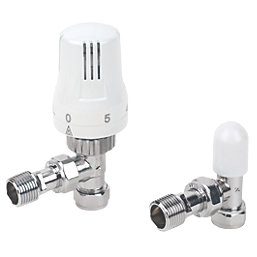
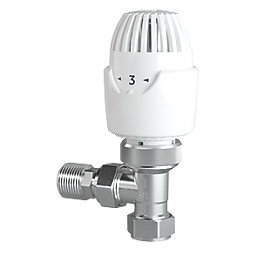
TRVs automatically control a radiator’s output to stop a room overheating and reduce energy bills. It works by an internal wax or liquid sensor expanding as the room warms, shutting the valve pin when the set temperature is reached. The numbered dial (typically 1 to 5) sets room temperature, not heating speed: setting 3 maintains roughly 20°C.
Under 2022 Approved Document L regulations, TRVs are mandatory on all new-build heating installations and boiler replacements. It is important to know that the wax/liquid sensor reacts to the temperature immediately around the valve and not the room as a whole. This means if it is blocked behind a curtain or exposed to direct sunlight, it can shut off too early because of the increased heat. If there is a draught near the valve, it can fool it into thinking the room is cold, which keeps the valve open for longer than it needs to be. Over time the wax/liquid sensors can lose their accuracy, which causes the radiator to not work properly.
TRVs also can’t be fitted in the room containing the thermostat, as they will end up competing against each other.

Manual radiator valves
Manual radiator valves stay wherever you set them and do not respond to room temperature changes. They are simple and affordable with no internal sensors that can fail; they give you basic hand-adjusted heat control. Because they do not shut off automatically, fit them in the room with your main wall thermostat to avoid conflicting temperature readings and keep your boiler running efficiently.

Smart radiator valves
Smart radiator valves are connected to Wi-Fi or a smart heating hub. This gives you individual control over the temperature of each room simply by using the appropriate device, e.g., a smartphone app. These systems can be more expensive to install than others because of the more advanced technology, as well as needing an adequate Wi-Fi connection and the need for the devices to be charged. However, this type of valve is well suited to those with larger homes or homes with irregular occupancy patterns.

Lockshield valve types
Lockshield valves balance water flow across all radiators, set once by an installer rather than adjusted day to day. Different types vary mainly by finish or whether they integrate a bleed function or dual-fuel T-piece for towel rails, but every option performs the same balancing job underneath.
Installers set them once during setup to balance water flow across all radiators. They need little ongoing attention and are not for regular adjustment, as incorrect settings unbalance the whole heating system.
Straight, angled and corner valves
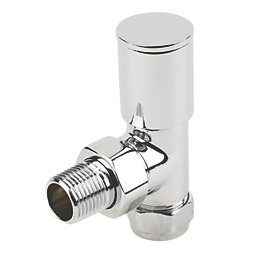
It’s important to choose your valve orientation based strictly on pipework layout to ensure a clean installation. Use straight valves when pipes come straight up through the floor into the base. Use angled radiator valves when pipes turn 90 degrees from the floor into a side connection. Use corner valves when pipes emerge horizontally out of the wall. Selecting the wrong shape forces strained pipework, leaking joints, or a valve head that will not sit flush against the radiator. This can cause the valve to slowly leak water over time as it’s under more strain from an incorrect fit.
How to adjust or turn off a radiator valve
Adjusting or isolating a radiator valve allows you to control room temperature or safely remove the unit for decorating and maintenance.
-
Turn off heating: Switch off the boiler or programmer before starting to prevent scalding and pressure shifts.
-
Identify valve types: Confirm which side is the TRV/wheelhead (inlet) and which is the lockshield (outlet) before turning.
-
Everyday adjustment: Rotate the TRV dial to your target setting. To shut it completely, remove the TRV head and screw on a plastic decorator's cap. Frost protection prevents TRVs from closing fully on their own, so the dial alone can't fully isolate the radiator.
-
Isolate the radiator: Remove the lockshield cap and turn the spindle clockwise using grips or an adjustable spanner. Count and record the exact number of turns so you can balance the system when reopening.
-
Troubleshoot cold spots: If the radiator is hot at the bottom but cold at the top, bleed trapped air from the bleed valve instead of adjusting the flow valves. You can use our how to bleed a radiator guide to help with this.
Parts of a radiator
There are many parts of a radiator; they are made up of more than just the metal panel.
Radiator body and fins
How a radiator body is designed directly affects the heat output. For example, folded ‘fins’ can significantly increase the surface area of a radiator, which allows more heat to dissipate. Aluminium fins are the best at conducting heat, meaning they can heat up a room faster than a steel radiator.
Valves: TRV or wheelhead, and lockshield
Every radiator requires two essential controls: a wheelhead (or modern TRV, a Thermostatic Radiator Valve) on the flow side to control temperature and a lockshield on the return side to keep the system balanced. Getting these two settings right is important for heating efficiency.
Bleed valve, brackets and towel rail elements
Essential radiator parts and accessories and towel rail fittings keep your heating system running efficiently.
-
Bleed Valve: Releases trapped air to restore full heat output.
-
Wall Brackets: Secure heavy radiators firmly to masonry or stud walls.
-
Dual-Fuel Element: Converts towel rails for electric heating when central heating is off.
What are the two valves on a radiator for?
One radiator valve is an inlet valve which controls the flow of water coming into the radiator. The outlet valve is for controlling the flow of water going out of the radiator.
TRV or wheelhead valve: controlling flow in
This flow control valve adjusts your daily radiator temperature. Manual wheelheads require hand-turning to open the valve and let more hot water in. Thermostatic Radiator Valves (TRVs) feature numbered settings, typically 1 to 5, and adjust water flow automatically to hold the room at your chosen setting, shutting off once that temperature is reached.
Lockshield valve: balancing flow out
The lockshield valve controls water leaving the radiator and is set once during installation to balance the system, typically remaining hidden beneath a protective plastic cap. Homeowners shouldn't adjust it during day-to-day use. Proper balancing ensures even heat distribution across your home, preventing radiators closest to the boiler from hogging all the hot water while leaving those further away lukewarm.
How to tell which pipe is the inlet and which is the outlet
An inlet pipe will have either a TRV or wheelhead valve attached to it. A TRV is a chunky, elongated plastic or metal cylinder. It has a numbered scale (usually 0 to 5 or *, representing frost protection) printed around the circumference.
A wheelhead is shaped like a small wheel, a ridged knob, or a smooth cap.
It usually has no temperature numbers, sometimes just simple directional arrows or an on/off indicator.
An outlet pipe will have a lockshield valve attached. It looks similar to a wheelhead valve, but it has a smooth, plastic safety cap with no ridges or a bare metal spindle, and it cannot be turned by hand.
Radiator controls: valves versus room-level heating controls
Effective radiator controls rely on a clear division of labour between individual units and whole-house systems. Manual valves and Thermostatic Radiator Valves (TRVs) sit directly on each radiator, regulating the local water flow to adjust the temperature room by room. In contrast, central radiator controls, such as room thermostats, system programmers, and smart heating hubs, manage the boiler and overall system scheduling, dictating when heat is generated across the entire home.
These components must work together to maintain comfort and efficiency. Local radiator controls only manage the heat available to them; a TRV cannot force a radiator to warm up if the main thermostat has already satisfied the home's set temperature or if the programmer has turned the boiler off. Central controls decide when the system runs at all. Room-level valves only decide how much of that heat each radiator gets.
How to tell if a radiator valve is open or closed
To know if a radiator valve is open or closed, check its type and position. On a Thermostatic Radiator Valve (TRV), higher numbers or a sun symbol mean the valve is open, while 0 or a snowflake symbol indicates it is closed, though frost protection may still permit a slight trickle. For manual or lockshield valves, turn the wheelhead clockwise to close it and anticlockwise to open it. If the valve will not turn any further by hand, it has reached the end of its travel.
Common radiator valve mistakes to avoid
Avoid these common radiator valve mistakes to ensure your heating system runs efficiently and reliably:
-
Blocking TRVs with furniture or curtains: Trapped heat tricks the sensor into reading the room as warmer than it is.
-
Cranking TRVs to maximum: Higher settings only set a higher target room temperature, not a faster heat-up time.
-
Adjusting lockshields unrecorded: Turning a lockshield without counting the exact turns first unbalances your whole system.
-
Forcing stiff valves: Applying excess pressure breaks plastic caps or internal pins instead of properly servicing the valve.
-
Installing incorrect shapes: Choosing straight, angled, or corner valves incorrectly creates strained or messy pipework.
-
Skipping rebalancing after valve changes: Replacing multiple valves without rebalancing the system afterwards leaves distant radiators cold and underheated.
Choosing the right radiator valves
Choosing the right radiator valve comes down to three decisions: control type, connection shape, and finish. TRVs suit most rooms for automatic temperature control, manual valves work where a thermostat already governs the room, and smart valves add scheduling and remote control. Match the connection shape (straight, angled, or corner) to your existing pipework, then pick a finish to suit the room. Not sure which combination fits your radiator? Check our full radiator buying guide for help matching valves to your specific setup.