
Types of Flooring
Types of Flooring

Choosing the right flooring comes down to three main factors: traffic levels, moisture exposure, and subfloor condition.
Get those right, and most floor installations are a straightforward DIY job. Laminate, vinyl, and carpet are all manageable with the right preparation. This guide covers the main flooring types, where each works best, and what to check before you start your DIY flooring project.
Shop Flooring Related Categories
Key takeaways
Get these basics right before you start. They're what separates a clean, lasting result from a floor that fails early. Subfloor prep, material choice, and moisture levels all matter before a single board goes down.
-
Hard flooring vs soft/resilient flooring: Hard flooring includes timber, laminate, tile, and stone. It suits high-traffic areas well. Soft and resilient flooring includes carpet, LVT, cork and rubber. It prioritises warmth and comfort.
-
Flooring costs: Costs range from £5 per m² to £150+ depending on the type of flooring. Always factor in underlay, adhesive, and fitting fees on top.
-
Durability: Porcelain tile and natural stone last longest; carpet wears fastest in high-traffic zones and isn't waterproof.
-
Wet rooms: Kitchens, bathrooms, and utility rooms need 100% waterproof flooring. Use vinyl, LVT, or porcelain tile only. Laminate and solid hardwood will swell and rot.
-
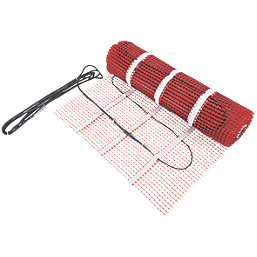
Underfloor heating compatibility: Not all flooring is compatible with underfloor heating. Porcelain and engineered wood work well; solid timber and thick carpet block heat transfer.
-
Account for wastage: Add 10% to your material order for cuts and wastage. Acclimatise timber and laminate for 24–48 hours before fitting to prevent buckling.
What are the different types of flooring?
|
Flooring Type |
Best For |
Avg. Cost (per m²) |
|
Laminate |
High-traffic living areas, hallways, bedrooms |
£10–£30 |
|
Luxury Vinyl Tile (LVT) |
Bathrooms, kitchens, wet areas |
£20–£45 |
|
Sheet Vinyl |
Budget kitchens, utility rooms, cloakrooms |
£10–£25 |
|
Carpet |
Bedrooms, lounges, staircases |
£10–£40 |
|
Engineered Wood |
Open-plan living, dining rooms, underfloor heating |
£30–£60 |
|
Solid Hardwood |
Heritage properties, formal reception rooms |
£50–£85+ |
|
Porcelain/Ceramic Tiles |
Bathrooms, wet rooms, kitchen floors |
£20–£50 |
|
Natural Cork |
Playrooms, home offices, eco-conscious spaces |
£25–£45 |
|
Linoleum |
High-traffic kitchens, utility spaces |
£20–£40 |
Hard flooring types
Hard flooring is built for heavy foot traffic, muddy boots, and daily wear.
Made from compressed wood fibres, real timber, fired clay, or stone. These surfaces don't flex underfoot and are straightforward to keep clean. They are best suited to busy hallways, kitchens, dining areas, and ground-floor living spaces where durability takes priority.
Solid hardwood flooring
Solid hardwood is the premium flooring option, as it is cut from single pieces of real timber like oak and built to last a lifetime.
Supply-only costs run £50–£120+ per m². It can be sanded back and refinished multiple times. It can help to increase your property value. For living rooms, hallways, and bedrooms, it's hard to beat.
There are some limitations to solid hardwood. It expands and contracts with humidity, so it must not be used in kitchens and bathrooms. Professional fitting is usually required to glue or secret-nail boards securely. Compatibility with underfloor heating is quite limited; it’s important to check manufacturer guidance before considering installing it.
Engineered wood flooring
Engineered wood flooring delivers the look and feel of real timber with better dimensional stability and moisture resistance.
Supply-only costs run between £30 and £80 per m². The layered plywood or HDF (High-Density Fibreboard) core keeps planks flat, making it compatible with underfloor heating where solid wood often isn't. Many ranges feature click-lock joints for straightforward DIY fitting.
One trade-off to be aware of is that the real wood veneer is thinner than solid hardwood, so it can only be sanded back and refinished once or twice before wearing through.
Laminate flooring
Laminate flooring is the budget-friendly hard flooring option. It’s made up of an HDF core, a photographic timber-effect layer, and a tough protective resin on top.
Supply-only costs run between £10 and £40 per m². Check the AC rating before you buy: AC3 covers light domestic wear; AC5 is rated for heavy commercial traffic. Click-lock joints make it a straightforward DIY fit.
Two limitations to factor in. Standard laminate isn't fully waterproof; water sitting on the seams causes swelling, so keep it out of wet bathrooms. And unlike timber, it can't be sanded back or refinished once worn through.
Vinyl and LVT flooring
Vinyl and LVT are fully waterproof, easy to clean, and compatible with underfloor heating. This makes it ideal for kitchens, bathrooms, and busy hallways.
Sheet vinyl is the budget option at £5–£20 per m²; it is also flexible and straightforward to lay. LVT/LVP features rigid, layered planks that click together or glue down, running between £15 and £50 per m², with more realistic wood and stone visuals.
They have two main drawbacks. Low-end sheet vinyl tears under heavy furniture legs. Rigid LVT can feel cold underfoot without a suitable underlayment underneath.
Ceramic and porcelain tiles
Porcelain is denser, harder, and more water-resistant than ceramic. This is because it is fired at higher temperatures and is virtually non-porous.
Ceramic runs between £15 and £40 per m²; porcelain between £25 and £60+ per m², supply only. Both are exceptionally durable, fully waterproof, and easy to clean, which makes them ideal for high-traffic kitchens, bathrooms, and hallways.
Three things to factor in before choosing one of these options:
-
They both feel cold and hard underfoot without underfloor heating.
-
They're heavy; check the substrate can take the load on upper floors.
-
Cutting requires specialist tile cutters, so standard woodworking tools won’t be suitable.
Natural stone flooring
Natural stone, e.g., slate, limestone, travertine, and granite, is the premium end of hard flooring at £60–£150+ per m², supply only.
Every floor is unique, durability is unmatched, and it pairs exceptionally well with underfloor heating. Because of this, it can significantly increase your property value.
Before considering this option, there are four potential issues to think about:
-
It's cold underfoot without underfloor heating.
-
It's extremely heavy; a structural check is required before laying on upper floors.
-
Professional fitting is essential.
-
Because stone is naturally porous, it needs sealing at installation and periodic resealing to stop stains and moisture soaking in.
Soft and resilient flooring types
Soft and resilient flooring prioritises comfort, warmth, and sound absorption over durability.
Made from woven fibres, natural cork, and flexible rubber, these surfaces are warmer underfoot and generally more budget-friendly than hard flooring.
Carpet — the default choice for bedrooms, staircases, and living areas. Wool, synthetic, or blended fibres.
Carpet tiles — modular, easy to DIY fit, and individual tiles can be swapped out if stained or worn. Best for home offices, basements, and high-traffic areas.
Cork — eco-friendly, naturally warm, and comfortable underfoot for long periods. Excellent thermal and acoustic insulation.
Rubber — durable, water-resistant, and slip-resistant. Available in sheets or interlocking tiles. The hard-wearing option for home gyms, utility rooms, and garages.
Carpet
Carpet runs between £10 and £50+ per m² supply only, available in loop, twist, cut, and Saxony piles, as well as modular carpet tiles.
It adds warmth, comfort underfoot, and sound insulation, which makes it the default choice for bedrooms and lounges. Three limitations to factor in:
-
It stains easily
-
Wears faster in high-traffic zones
-
It isn't waterproof
Keep it out of kitchens and bathrooms.
Cork flooring
Cork is a sustainable option, as it is harvested without felling the tree. It runs between £20 and £45 per m², supply only.
Naturally warm, soft underfoot, and excellent at absorbing impact sound. Many ranges feature click-lock joints for straightforward DIY fitting.
Two limitations to factor in:
-
Cork is sensitive to standing moisture and fades under direct UV sunlight
-
It needs sealing and careful room placement to perform long-term.
Rubber flooring
Rubber flooring is highly durable, shock-absorbing, and slip-resistant, which is great for hard-wearing spaces like home gyms, utility rooms, and garages.
Supply-only costs run between £15 and £40 per m². Comfortable underfoot for prolonged standing.
One thing to remember:
-
Some rubber products off-gas a distinct synthetic smell initially, you’ll need to keep the room well-ventilated for a few days after fitting.
What to consider before buying flooring
Before you choose your flooring, run through this checklist to help make sure you make the right decision for your project.
-
Subfloor type — concrete slabs handle heavy tiles; timber joists need flex-tolerant materials or a structural plywood overlay. Get this wrong and the floor fails.
-
Room usage and foot traffic — high-traffic hallways need high-AC-rated laminate or durable tiles. Bedrooms prioritise comfort — thick-pile carpet works where durability isn't the priority.
-
Moisture levels — kitchens, bathrooms, and basements need 100% waterproof materials. LVT or ceramic tiles only. Standard laminate and solid wood will swell, rot, or delaminate.
-
Underfloor heating compatibility — porcelain tiles and engineered wood work well with underfloor heating. Solid timber and thick carpets block heat transfer. Always check manufacturer guidance before specifying.
-
True cost per m² — factor in underlay, damp-proof membranes, adhesive, edge trims, and fitting fees on top of the base material price. Supply-only costs rarely tell the full story.
-
Installation method — click-lock planks suit confident DIYers. Full stick-down vinyl, secret-nailed hardwood, and mortar-bedded tiles usually need an experienced professional fitter.
Which type of flooring works best in each room?
|
Room |
Best Flooring Type |
Reason |
|
Kitchen |
Vinyl, LVT, or porcelain tile |
100% waterproof, easy to clean, handles heavy foot traffic. |
|
Bathroom |
Vinyl, LVT, or porcelain tile |
Fully waterproof, slip-resistant finish options available. |
|
Living room |
Engineered wood, laminate, or carpet |
Right balance of durability and comfort for your budget. |
|
Bedroom |
Carpet or engineered wood |
Maximum warmth, soft comfort, and sound absorption |
|
Hallway |
Laminate, vinyl, or tile |
Durable, easy to clean, built for high traffic and outdoor dirt. |
|
Utility room |
Vinyl, rubber, or tile |
Moisture-resistant and tough against heavy appliances. |
Common flooring mistakes to avoid
Avoiding the following mistakes can help make your DIY project faster and cheaper.
-
Not acclimatising wood or laminate — fitting boards straight from delivery causes buckling and gapping. Store planks flat in the installation room for 24–48 hours before fitting.
-
Skipping or using the wrong underlay — ruins underfoot comfort, reduces sound insulation, and frequently voids the manufacturer's warranty.
-
Neglecting subfloor preparation — laying over a damp, uneven, or dirty subfloor telegraphs every bump through the surface. Prep the subfloor properly before anything goes down.
-
Forgetting expansion gaps — floating floors expand and contract with temperature changes. Leave a 10–12 mm gap around walls and doorways, or planks will peak and tent.
-
Wrong flooring for wet zones — standard laminate and solid hardwood warp and rot under heavy moisture. Specify vinyl, LVT, or porcelain tiles in kitchens, bathrooms, and utility rooms.
-
No waste allowance — ordering only the net floor area leaves you short mid-job. Add at least 10% to your total m² to cover cuts, awkward corners, and mistakes.