
Understanding Concrete Mixes
Understanding Concrete Mixes

Concrete is an essential construction material, used in a huge range of DIY and professional construction projects.
A concrete mix is created by mixing cement with water and aggregates (usually, sharp sand combined with gravel or crushed stone). Adding water to the mixture makes it easy to shape and work with. However, mixing water with cement also causes a chemical reaction that binds everything together to create a solid, stone-like material. The combination of aggregate and cured cement sets hard enough to be used for construction.
The materials used and the exact ratios in which they are blended have a major impact on concrete’s performance, especially its strength and long-term durability. As a result, these are the primary factors that every DIYer or tradesperson should consider when mixing concrete. Additionally, other factors also affect concrete properties, including admixtures and curing conditions.
Some common uses for concrete in the UK are structural foundations, driveways, steps, paths and slab bedding. As well as being used by itself, concrete is often combined with reinforcement bars to create reinforced concrete, which has much higher tensile strength. Beams, columns and slabs in high rise buildings are a good example of this.
Mortar is another mixture made with cement that is similar to concrete but which is used for different purposes.
In this article, we’ll look at concrete, examining different concrete mix types and what they’re used for as well as different concrete mix ratios. After that, we’ll explain how to mix concrete correctly yourself.
Shop Concrete Related Categories







Key Takeaways
How it works: Concrete hardens when water reacts with cement, binding aggregates into a strong, solid mass.
Use: Concrete is used in construction because its immense compressive strength allows it to withstand heavy downward loads.
Ratios: The mix ratio of concrete ingredients determines the properties of the material once it has hardened.
Types Of Cement Mixes
There are two main uses for cement: mixing concrete and mixing mortar.
Mortar is, in fact, not a type of concrete. It is a different material.
-
Concrete is made by mixing cement with aggregates and water to create a material that is workable when wet but which cures hard. The key thing about concrete is that after it cures, it has excellent compressive strength. This strength makes it useful in a lot of construction applications.
-
Mortar is a mixture of cement, sand and water that is also workable when wet and cures hard. However, it is primarily used as a binding agent, binding bricks, blocks or stones together. It provides adhesion, sealing and some structural strength.
Cement is not normally used by itself. Aggregates in cement and sand in mortar are an essential part of the mix. When people use the term ‘cement mix’, they are normally referring to readymade mixes of either concrete or mortar.
Concrete mix
A concrete mix is a mixture of cement, water and aggregates.
Cement is the essential ingredient, but it does not act alone to make concrete. Cement acts as a binding agent. When water is mixed with cement, it causes a chemical reaction called hydration in which the cement hardens. When cement is mixed with aggregates and hardens, it forms a solid matrix around the aggregates, binding the entire mix together to create concrete.
The aggregates in a concrete mix provide bulk, durability and strength. While the cement acts as a glue to hold everything together.
The main property that concrete provides in construction is compressive strength. It is very useful in building foundations, for example, providing a solid base on which further construction can happen. Besides this, there is a huge range of other uses for concrete.
Here are some other examples:
-
Bases for sheds and garages
-
Fence post footings
-
Blindings
-
Domestic floors
Often, concrete is combined with metal reinforcement bars. These provide tensile strength (Strength against bending) and make it possible to use concrete in a far wider range of uses.
Here are some common uses for reinforced concrete:
-
Floor slabs
-
Beams and columns
-
Lintels
-
Heavy duty foundations
Common admixtures used in concrete are plasticisers, air-entraining agents, accelerators, retarders, water reducers and fibres.
Mortar mix
A mortar mix is a mixture of cement, sand and water.
Mortar does provide some structural strength. However, its primary purpose is as a binding agent. The most well known use, as an example, is in brickwork. Mortar is used to lay bricks, acting as a workable material in which bricks can be laid, binding them together when it sets and contributing to the structural strength.
Mortar does not have as much structural strength as concrete because it does not contain aggregates. In a brick wall, the bricks provide more of the structural strength.
There are, in fact, various types of mortar, and there are more use cases than just for brickwork.
Here are the main types of mortar:
-
Brickwork and pointing
-
Screed
-
Render
As with concrete, the exact ingredients and the mortar mix ratio determine the properties the material has when it sets. Mortars also often include additional ingredients, such as:
-
Lime – improves workability, flexibility, and reduces cracking
-
Fibres
-
Admixtures – plasticisers, air-entraining agents, retarders and accelerators
Cement mix
The term cement mix is usually used for premade mixes of either mortar or concrete.
Readymade cement mixes are often very useful, saving the need to buy separate ingredients and mix them together in a cement mixer.
Here are some examples:
-
Mortar repair mixes
-
Postfix concrete (for fence posts)
-
Cement repair mixes
Concrete Mix Ratios
The ratio at which aggregates and cement are mixed together in a concrete mix is very important. This is the main factor that determines the final strength and physical properties of the concrete.
Most concrete mixes use a combination of sharp sand and coarse aggregate (crushed stone or gravel). The coarse aggregate provides much of the durability and strength. However, sharp sand is also used because it is a strong and highly durable material.
You can either buy aggregates that are a ready mix of sharp sand and coarse aggregate, or you can buy the two parts separately.
Concrete mix quantities are expressed as a ratio of cement to aggregate. A common ratio, for example, is 1:5. This has 1 part cement to 5 parts ready mix aggregate.
You can also list the aggregate quantities separately. 1:5 can also be expressed as 1:2:3. This contains 1 part cement, 2 parts sharp sand and 3 parts coarse aggregate.
Common UK Concrete Mix Ratios
Increasing the proportion of cement (relative to sand and aggregate) generally increases compressive strength.
It’s important to make sure you use exactly the right mix of concrete if your construction, building or DIY project task requires a specific concrete mix. However, here are some common mix ratios used in general construction work in the UK:
-
1:9 - A low strength mix used for jobs such as filling voids, blindings and haunching for drainage. Aggregates listed separately - 1:3:6
-
1:6 – This mixture is slightly stronger and used for tasks such as light footings, patio sub-bases and fence posts. Aggregates listed separately - 1:2.5:3.5
-
1:5 – This is a common mixture used for jobs such as garage and shed bases, domestic floors and driveways. Aggregates listed separately - 1:2:3
-
1:4 – Used to provide additional strength for uses such as driveways and foundational work. Aggregates listed separately - 1:1.5:2.5
As with concrete, mortar mix ratios are also highly important. The quantities of sand and cement have a strong bearing on the properties the mortar will have when it dries.
Tips For Mixing Your Own Concrete
When you mix concrete at home, the most important thing is accurately measuring the ingredients to make sure you get the ratios correct. To do this, you should always use a bucket. Fill the bucket so it is exactly full and level each time you measure an ingredient. This will ensure you add the correct amounts of each ingredient.
Do not use a shovel because shovels do not hold the same amount of each ingredient.
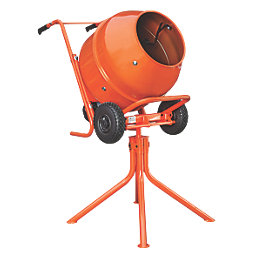
Here’s how to mix your own concrete using a cement mixer:
Step 1. Put around two-thirds of the total water needed into the mixer and turn it on
Step 2. Add the aggregate (coarse first if bought separately)
Step 3. Add the cement and leave everything to mix until the colour is consistent
Step 4. Slowly add the remaining water, stopping when the mix reaches the right workability
Step 5. Continue mixing until the consistency is even throughout
Using a bucket to accurately measure ingredients is particularly important with mortar mix ratios because mortar is often on display. Unequal mixing can lead to colour variations.