
Type 21 vs Type 22 Radiators
Type 21 vs Type 22 Radiators

Type 21 vs type 22 radiators, which should you choose? It’s a common question for those looking to install new radiators in their home.
They are both convector radiators, which work by pulling in cooler air from the bottom and heating it over hot internal fins, releasing the warm air from the top through vents.
But there are different models to choose which allow you to pick a radiator that caters to your room size, style, cost, and heat distribution needs. There are type 11 and type 33 designs, but here we’ll be focusing on and comparing type 21 vs type 22 radiators and how each model best serves your needs.
Shop Radiator Related Categories
What are convector radiators?
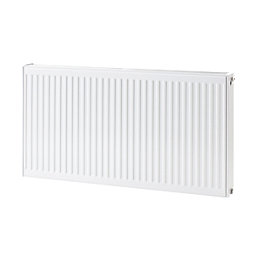
Convector radiators are the most common type of household heat source and work through a process called convection. They draw in cold air from the bottom, which heats up as it passes over the hot internal fins. As the hot air rises out of the topside vents more cold air is drawn in from the bottom of the radiator, and the process repeats.
This circulates warm air into your room with an even and efficient distribution.
There are different models to choose from. Type 11 is a single panel radiator perfect for smaller spaces, whereas type 33 is a triple panel ideal for rooms requiring a bigger heat output or for systems that require a higher BTU model to be mounted on a smaller wall space.
The differences between type 21 and type 22 radiators are obvious when you know them. Both are convector radiators, but your decision will depend on your budget, space and heating needs, as each model fulfills different requirements.
What is a type 21 radiator?
Type 21 radiators have two panels encasing one set of fins. In fact, the ‘2’ stands for the number of panels, and the ‘1’ for the row of fins. They are also known as double panel plus, or P+ models.
One set of fins means a sleeker and slimmer design. Type 21 radiators are ideal for smaller spaces and supply excellent heat, just not as much as a type 22.
This makes them ideal for bathrooms, kitchens, and modest living rooms.
What is a type 22 radiator?
They comprise two convector panels front and back as well as two rows of inside fins. Type 22 radiators also go by the names double panel, double convector, or K2 radiators.
Typical designs tend to be deeper and sit more away from walls due to that extra panel. However, this gives them a bigger heat output than a type 11 or type 21. Making them a smart choice for large or draughty spaces, like a hallway or open-plan house.
Key differences between type 21 and type 22 radiators
The main differences between type 21 and type 22 radiators are design, size, space, cost, and heat output.
-
Type 21 or 22 radiators are designed with a different number of fins. Type 21 has a single set. Type 22 has a pair.
-
That extra set of fins makes the Type 22 bulkier. Whereas the solo row in the Type 21 creates a slimmer model, keeping the radiator's edge closer to the wall.
-
Due to the small or larger build, P+ rads fit well in smaller spaces where gradual heat is needed. Type 22 is ideal for big or draughty rooms where a more powerful heat exchange is required.
-
Another difference between type 21 and type 22 radiators is price. Double panel rads are generally dearer due to their size and increased heat output. On top of that, installation may come with added costs.
-
The heat transfer in a Type 22 is faster and more intense due to the extra row of fins. Meaning this model might be more energy-efficient when compared to a P+ radiator.
Still in the middle ground of a type 21 vs type 22 radiator debate? Read on to understand in more detail which model will suit your home better.
How to choose between a type 21 and type 22 radiator
When it comes to a type 21 vs type 22 radiator, this is how you choose the right radiator for your room.
-
Consider the size of your space. Type 21 rads come with dual panels but a single set of fins. Making them better suited to smaller rooms. Type 22 gives more intense heat at a quicker rate but are bulkier. Perfect for bigger spaces.
-
What can you afford? Type 21 radiators are cheaper due to size and heat transfer functionality. K2s generally cost more to install, too.
-
Type 22 radiators come with dual panels and a double set of convector fins. Making it bigger but quicker in heating spaces and more capable of transferring heat around larger rooms. They may also be more cost-effective.
If deciding on model type is your first step in replacing noisy radiators, be sure to bleed your radiators first as this may resolve any issues.
However, if you’ve decided on a type 21 or type 22 radiator and want to replace them. This is how to fit and replace radiators.
Key takeaways when comparing type 21 and type 22 radiators
When it comes to type 21 vs type 22 radiators, only you will know which one will work best for your home.
Both are convector radiators, which operate by pulling in cold air from the bottom and heating it over hot internal fins and then distributing that warm air through vents at the top. Type 21 radiators are slimmer with a gradual release of heat and are ideal for smaller spaces, like bathrooms and kitchens.
Whereas type 22 radiators are bulkier but generate heat more quickly, making them great for large open spaces. They tend to be dearer than the 21 model.
Finally, when replacing your old rad with a type 21 or type 22 radiator, we’ve written a step-by-step article that shows you how to remove a radiator.